From scattered visuals to a brand people actually recognize, trust, and remember
There's a moment that hits every growing brand.
You're posting. You're designing. You're spending money on content.
And yet — something feels off.
The visuals look fine. They're "good." Maybe even beautiful.
But they don't feel like you.
This is the point where most founders realize they don't have a design problem. They have a system problem.
Because a visual system isn't a folder full of pretty assets. It's a structure. A set of rules. A way of showing up that stays the same even when the content changes.
And building it? Less about creativity than you think. More about order than you'd expect.
Let's walk through it — no fluff, no theory for theory's sake.
Step 1: Get clear before you open any tool
Before you touch Figma. Before you pick a color. Before you even think about fonts.
Ask yourself one question:
"What should people feel — and understand — the second they see my brand?"
Not "what looks cool." Not "what's trending on Pinterest."
But:
- Are you premium or accessible?
- Disruptive or calm?
- Authoritative or playful?
Example: Apple
Apple didn't wake up one day and say "let's be minimal." Their visual language — the clean lines, the white space, the silence — reflects precision, control, and simplicity in complexity.
Design follows strategy. Always.
Step 2: Write down your visual principles (not just your "vibe")
Before colors. Before fonts.
Write down rules of behavior.
These aren't aesthetic choices. These are your design philosophy.
Examples:
- "We prioritize clarity over decoration"
- "We use contrast to guide attention, not chaos"
- "No shadows. No gradients. No noise."
- "Every element must have a job"
Why this matters:
Without principles, every design decision becomes a fight. "I like this." "I don't like that." It's all taste.
With principles, design becomes predictable. A new person joins your team? They don't guess. They follow the logic.
Step 3: Build a color system, not just a palette
Most brands pick colors: a primary, a secondary, maybe an accent.
Strong brands build color logic.
That means defining:
- Primary → brand recognition (your main color)
- Neutral → background, structure, breathing room
- Accent → calls to action, important buttons
- Support → secondary info, less important elements
But here's the catch — recognition only works when color is consistent and predictable.
Example: Spotify
Spotify doesn't spray green everywhere. They use it strategically: on buttons, on accents, on identity anchors here and there.
That's not a color choice. That's a system.
Step 4: Treat typography as a communication tool, not decoration
Your fonts are how your brand speaks visually.
A real typography system defines:
- Primary font (your main voice)
- Secondary font (a supporting tone)
- Hierarchy (H1, H2, body, captions — what's big, what's small, what's bold)
- Spacing rules (how much breathing room)
- Alignment logic (left, center, justified — and when)
What most brands miss:
Typography directly affects how intelligent and trustworthy you seem.
Studies on first impressions show that people judge credibility in milliseconds — heavily influenced by layout and readability.
Example: The New York Times
They use strict hierarchy. Consistent spacing. Predictable rhythm.
The result? Clarity → Authority → Trust.
No fancy fonts needed. Just a system.
Step 5: Set layout rules (this is where most brands break)
Here's the truth.
Most brands have colors. Most have fonts.
But they have no structure.
A visual system needs:
- Grid logic (invisible lines that hold everything together)
- Spacing consistency (same gaps everywhere)
- Alignment rules (left, center, right — pick one and stick to it)
- Composition patterns (this image + this text = this layout)
Why it matters:
Your brain processes structured information faster. It's called cognitive fluency — the easier something is to understand, the more you trust it.
This isn't opinion. It's psychology.
Step 6: Create reusable design patterns (stop starting from zero)
Now we move from theory to actual doing.
Instead of designing every Instagram post, every story, every ad from scratch — create:
- Post templates (3–5 formats, that's it)
- Story templates (headline + image + CTA)
- Carousel structures (cover → problem → solution → CTA)
- Ad layouts (image on left, text on right — always)
Each one follows the same spacing. Same hierarchy. Same rhythm.
This is where your system becomes scalable.
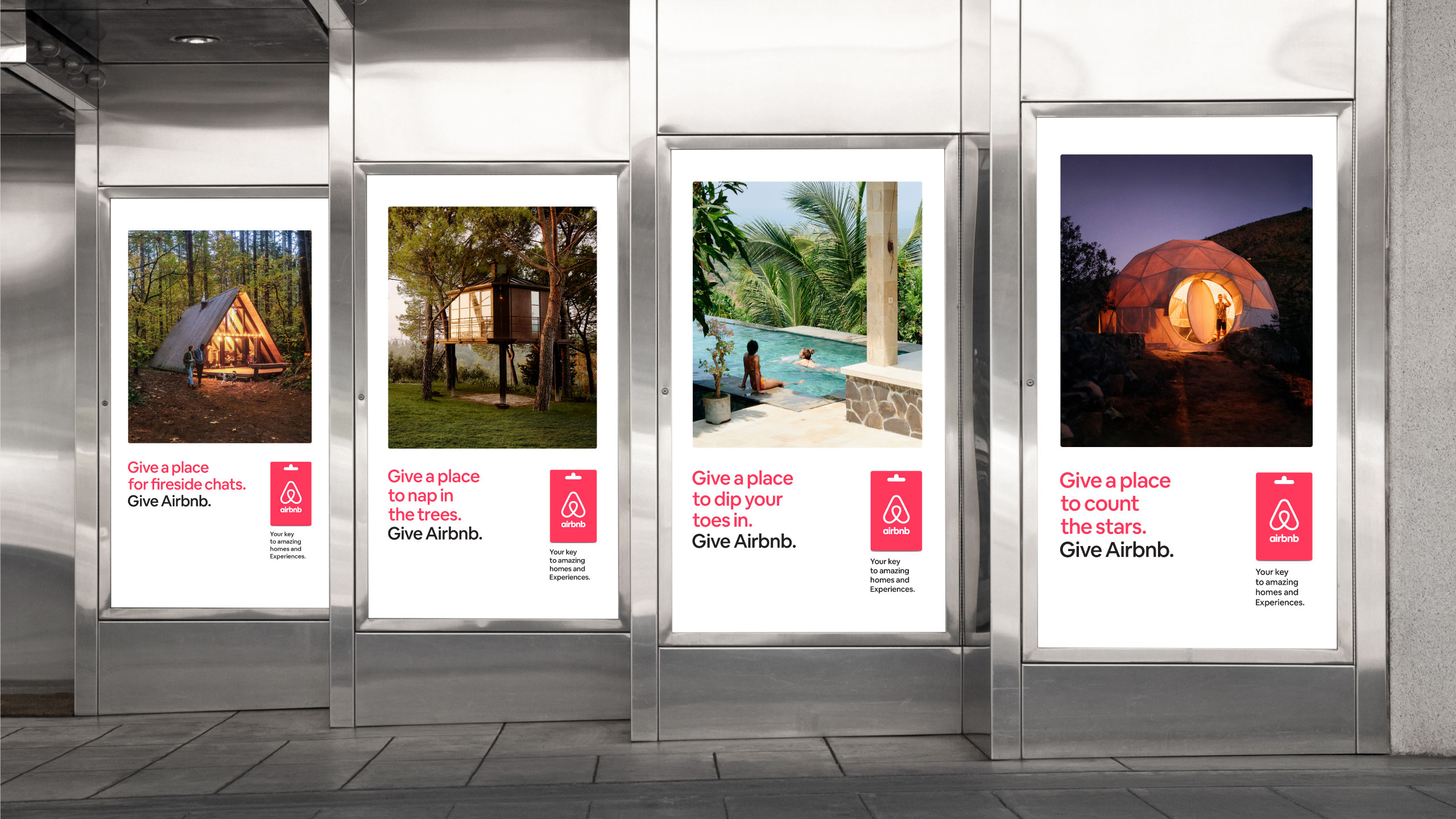
Example: Airbnb
Airbnb changes the content constantly — different cities, different hosts, different photos.
But the layout logic? The composition? The structure? Stays the same.
You know it's Airbnb before you read the logo.
Step 7: Lock down your image style (or lose consistency)
Images destroy more brand consistency than anything else.
To prevent that, define:
- Lighting — soft? high contrast? natural daylight?
- Color tone — warm, neutral, cold?
- Subject focus — product, people, environment?
- Framing — close-up? wide? centered? off-center?
Without these rules, your photo library becomes a random mess.
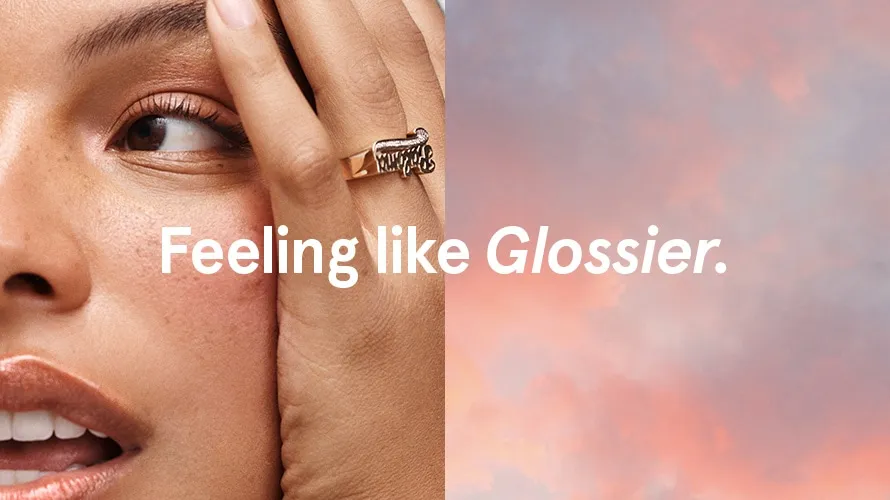
Example: Glossier
Glossier built an empire on:
- Natural light
- Real skin textures
- Minimal retouching
You don't need a logo to know a Glossier photo. The feeling gives it away.
Step 8: Write it down (if it's not documented, it doesn't exist)
You have the rules. Now save them.
A real visual system guide includes:
- Color rules (when to use each color)
- Typography hierarchy (screenshots with sizes)
- Layout guidelines (drawn examples)
- Correct vs. incorrect usage (show the bad version so people know what to avoid)
This becomes your design manual.
Companies with documented brand systems are more consistent, more efficient, and less likely to drift over time.
It doesn't need to be 100 pages. It needs to exist.
Step 9: Apply it everywhere (no exceptions)
A system only works if it's universal.
It must apply to:
- Instagram stories
- LinkedIn posts
- Your website
- Paid ads
- PDFs and presentations
- Email marketing
If each channel looks different — you don't have a system. You have fragments.
Step 10: Iterate without breaking the system
A strong system isn't rigid. It's controlled.
You can:
- Test new formats
- Experiment with platform-specific tweaks
- Evolve over time
But you never break:
- The core structure
- The identity anchors
- The visual logic
This balance — flexibility within rules — is what lets brands grow without losing themselves.
What most brands get wrong (let's be honest)
Most brands:
- Start with design (what looks cool)
- Skip strategy (why we exist)
- Copy trends (because it worked for someone else)
- Change direction every three months
The result?
Inconsistent visuals. Low recognition. Weak trust.
A visual system fixes this — but only if you build it in the right order.
Not "design first." Not "logo first."
Structure first.
Final thought: Design isn't what you see once. It's what repeats.
A single beautiful post means nothing.
A repeated structure means everything.
Because brands aren't remembered through moments. They're remembered through patterns.
And a visual system?
It's just a set of patterns strong enough to make your brand recognizable — even before your name appears.
That's what I help brands build. One system at a time.
Ready to build yours? Let's talk.